Subscribe to our newsletter
Stay updated year-round on Estonian Centre for Architecture’s tours and other activities here!

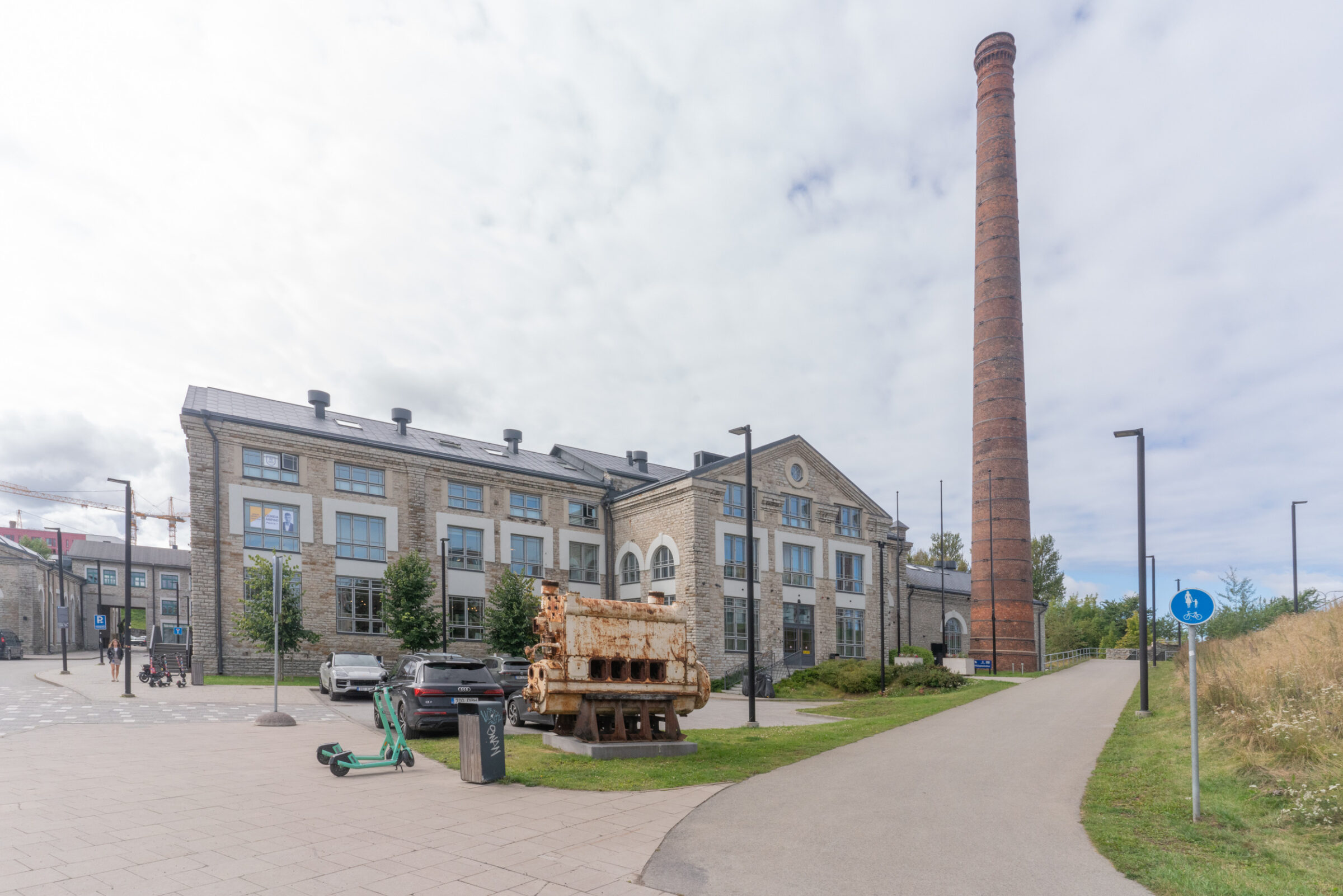
Address:Tööstuse tänav 48, Tallinn
Architects:1912
The history of the Noblessner factory complex begins in 1912, when Ludvig Emmanuel Nobel (nephew of Alfred Nobel) and Arthur Lessner established the second most important submarine factory in Tsarist Russia – the first was reportedly in St. Petersburg. In 1916, the factory was named after Peter.
In 1912, Russia adopted a naval development program that planned the construction of 18 submarines. The Noblessner factory received an order for 12 submarines, while six were planned to be built in St. Petersburg.
Why Tallinn? The location was strategically important – close to St. Petersburg and Helsinki, and also significant because the sea here was deeper than in the aforementioned cities, making it suitable for submarine construction and underwater testing.
During this exciting tour, we explore very different historical layers – the Soviet-era factory shelter, Oskar Kilgas’s stocking factory from the 1930s, the submarine factory assembly hall and welding rooms, Tanel Toom’s film pavilion, and the shipyard hospital. In addition, we learn some basic maritime terms and visit the modern, public, and hospitable Noblessner Quarter.
Behind the administrative building at Tööstuse 48, where the Noblessner information stand is located.
Soviet-era shelter, Oskar Kilgas’s stocking factory, film pavilion, Kalamaja Cemetery, Staapli Street, Krusentsern Square, new residential buildings, and Iglu Park.
Maximum visitor count:25
Tour length:45-60 min
The tour does not require registration, participation is based on a first-come, first-served basis.
Subscribe to our newsletter
Stay updated year-round on Estonian Centre for Architecture’s tours and other activities here!