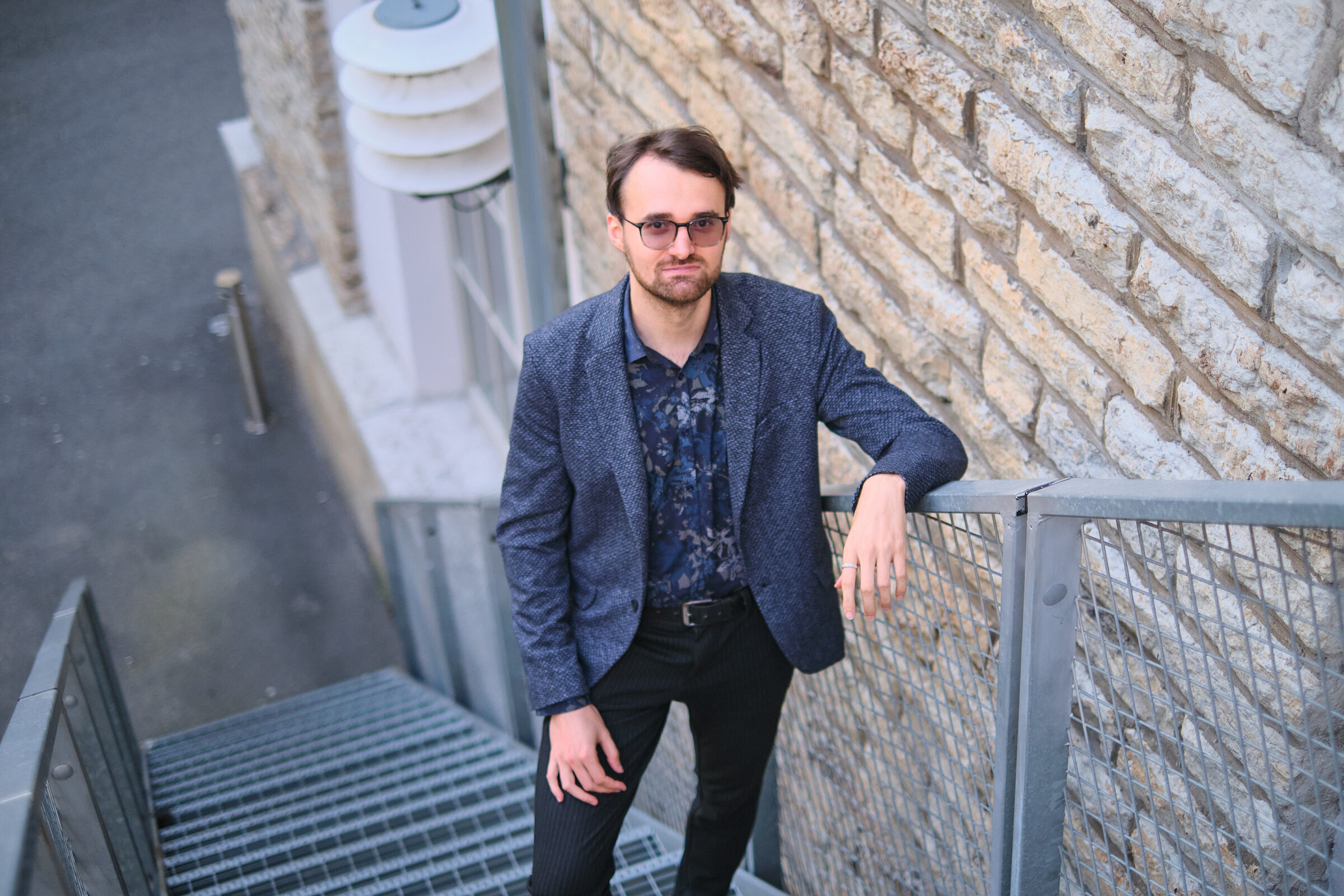
It’s time to get to know the Open House Tallinn team. First up, producer Aleksander Tali shares his thoughts and work.
Who are you and what do you do on a daily basis?
My background is in design, IT, video art, and event production, though I mainly work in the latter three fields. I’ve been involved with event production the longest – my very first experience came more than ten years ago at the Tartu Student Days festival.
How did you become interested in architecture, urban space, or design?
I first encountered design when I studied jewelry and metal art at a hobby school. From there my interest grew towards design more broadly, especially practical and functional design. Eventually, this curiosity led me to architecture, though that happened years later.
What resonates with me about architecture is that it is never just about form or aesthetics – it is about creating an environment for people. Good architecture creates conditions where it is comfortable, safe, and inspiring to be. Architecture is also like an invisible companion that we don’t always think about – it guides our movement, influences our mood and sense of space, supports social contact, and provides the backdrop to everything we do in the city.
Which place in Tallinn always makes you rethink the city?
If I had to choose one place, it would be Linnahall. It’s an incredibly powerful building that constantly makes me reflect on how we do – or could – make use of existing possibilities and cultural or historical layers to enhance the value of public space. I’m also fascinated by old industrial areas and their future development – how to preserve something from the past while at the same time creating a new, vibrant environment. In these places, I often think about how they could be developed to be more inclusive and provide greater practical value for the city’s future.
Which space or building has inspired you recently?
It’s not a recent experience, but the first that comes to mind is the Arvo Pärt Centre. It’s a building very sensitively placed in nature, and it feels both cozy and spacious at the same time.
Which historical building would you like to live or work in?
When I think about a space I’d like to work in, I don’t tie myself to one specific building but rather to an environment where different creative people and organizations come together. That said, I’d love to work in a technically historic hangar, warehouse, or garage – a place where I could create a pleasant workspace while also using the space for different hobbies.
What change would you like to see in Tallinn’s urban space in the future?
I hope that all new national cultural buildings will be as inclusive, useful, functional, and well thought-out as possible, considering the needs of everyone who might use them. I’d also like all new developments (including infrastructure such as the pollinator highway or cycle paths) to focus more on human-centered design, preserving nature, and creating more functional green spaces. At the same time, I wish more architectural layers would be preserved and that more recycled materials would be integrated into creating new spaces.
Which building or tour would you recommend visiting this year, and why?
I recommend our lightning talk program, because the talks are short, inspiring, and always teach something new and special about urban space.
I also encourage everyone to try indoor orienteering. It’s a unique way to exercise in the city, experience the urban space differently, and discover buildings at the same time.
As for building tours, I suggest stepping outside the city center this year and exploring areas you may not have visited before – for example, Kopli Kindergarten, MURG a ka Mustamäe State Gymnasium, and Estonian Repository Library.
The full building program will be announced on 26 August. In addition to building tours, lightning talks and special tours will also take place, with more information released in September. The festival is free of charge, though some tours require advance registration. Registration opens on 11 September at 6 PM via Fienta.