Our volunteer Alex Luik works as a copyright advisor at the Ministry of Justice and Digital Affairs. In his free time, he runs a blog about cinnamon buns and restores a Soviet-era wall cabinet. At Open House Tallinn, Alex took part for the first time as a volunteer guide, leading tours in the Manufaktuur quarter. Read about his experience here.
This year’s Open House Tallinn was my very first experience as a guide — and, in fact, my first time volunteering at all. I got involved quite naturally: last year, I heard about the festival for the first time and visited about five buildings as a participant. Afterwards, I signed up for the volunteer mailing list, and as soon as the opportunity came, I applied to be a guide.
A little later, I received the great news that I had been accepted, and I could start choosing my object. I didn’t have to think long before picking the Manufaktuur quarter, because I’ve always been fascinated by Tallinn’s industrial heritage and factory architecture. I often cycle past old industrial buildings and see how many large districts are transforming before our eyes. Right now, in the Kopli peninsula, it’s an especially exciting time — once-abandoned factory buildings are being given new life, turning into places for living, working, and leisure. That constant sense of transformation was exactly what I wanted to share on my tour.
My Open House experience showed me that the teams assigned to each building are trusted a lot and given plenty of freedom to shape their own approach. Everyone in our Manufaktuur team — the team leader, guides, and assistants — was thoughtful, creative, and committed to offering the best possible experience for visitors. Our collaboration with the site developer, Hepsor, also went very smoothly.
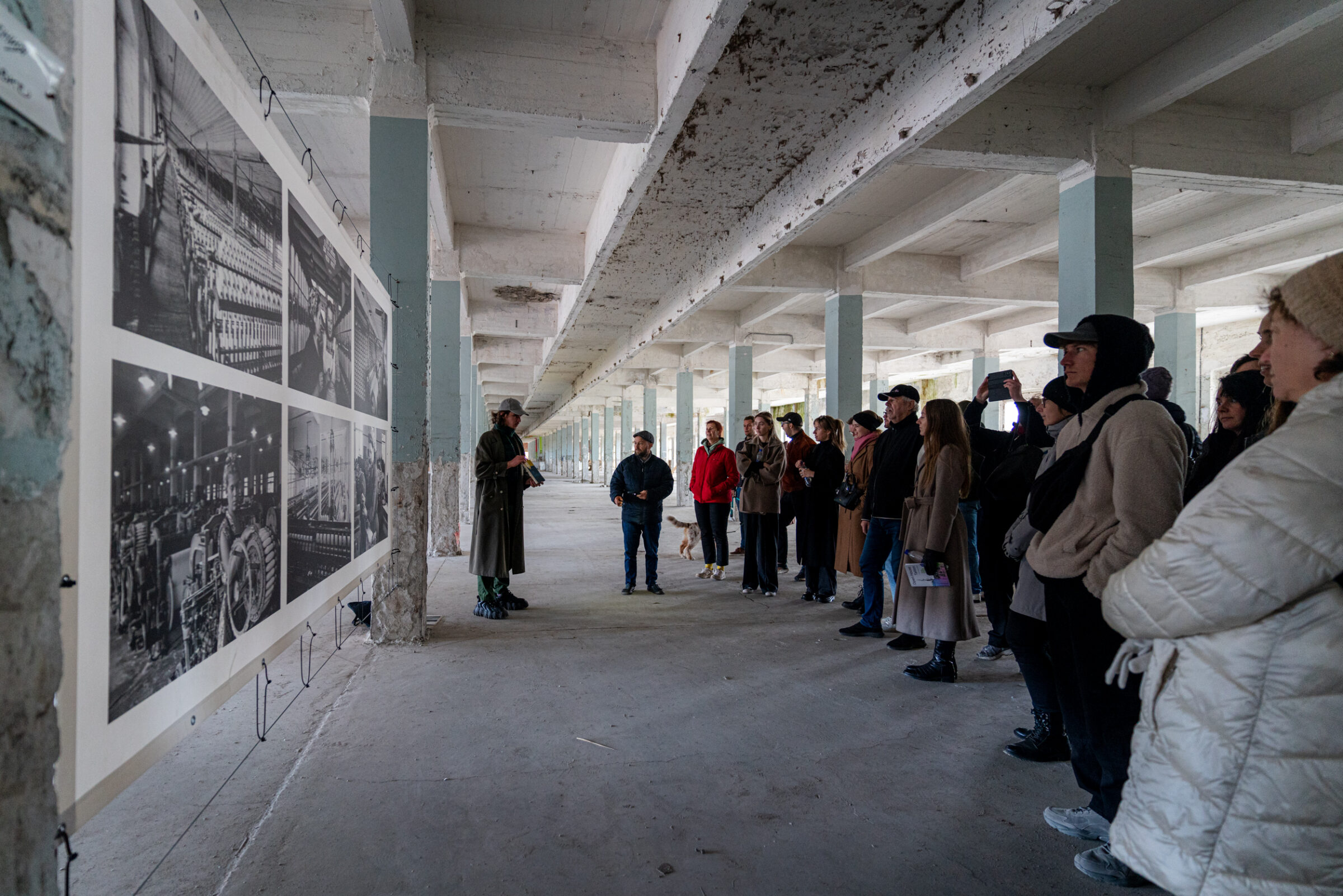
As a guide, I was given almost complete freedom: the language, duration, and a few safety requirements were fixed, but there was no predefined script. That meant each guide could design their tour in their own way. Personally, I love research, so I dug into old archives and documents to gather material for my route. It really felt like I could plan and deliver the tours just the way I envisioned them.
Surprisingly, guiding in English actually felt easier than doing it in Estonian. And one piece of advice for all future guides — don’t get discouraged if your audience doesn’t show much visible feedback, especially Estonians. Sometimes, someone who seemed quiet or serious during the tour will later come up to the organizers and share their heartfelt appreciation.
And one little incident to wrap up. I usually started each group at the same corner of the main factory building. One time, though, a spontaneous pop-up bar had appeared nearby — locals had gathered by an old machine shed, enjoying some strong spirits together. So I simply moved our group a bit further away to avoid disturbing each other. One of our proactive assistants, Annika, soon noticed that people at the back couldn’t hear well, so we made a quick side maneuver and continued our facade talk from the other side of the building. Later, we learned that those bar regulars were, in fact, “locals” who often hung out there — they weren’t interested in the tour and were happy to stay put. It was a funny reminder of how crucial teamwork is on-site, especially when reacting to unexpected situations.